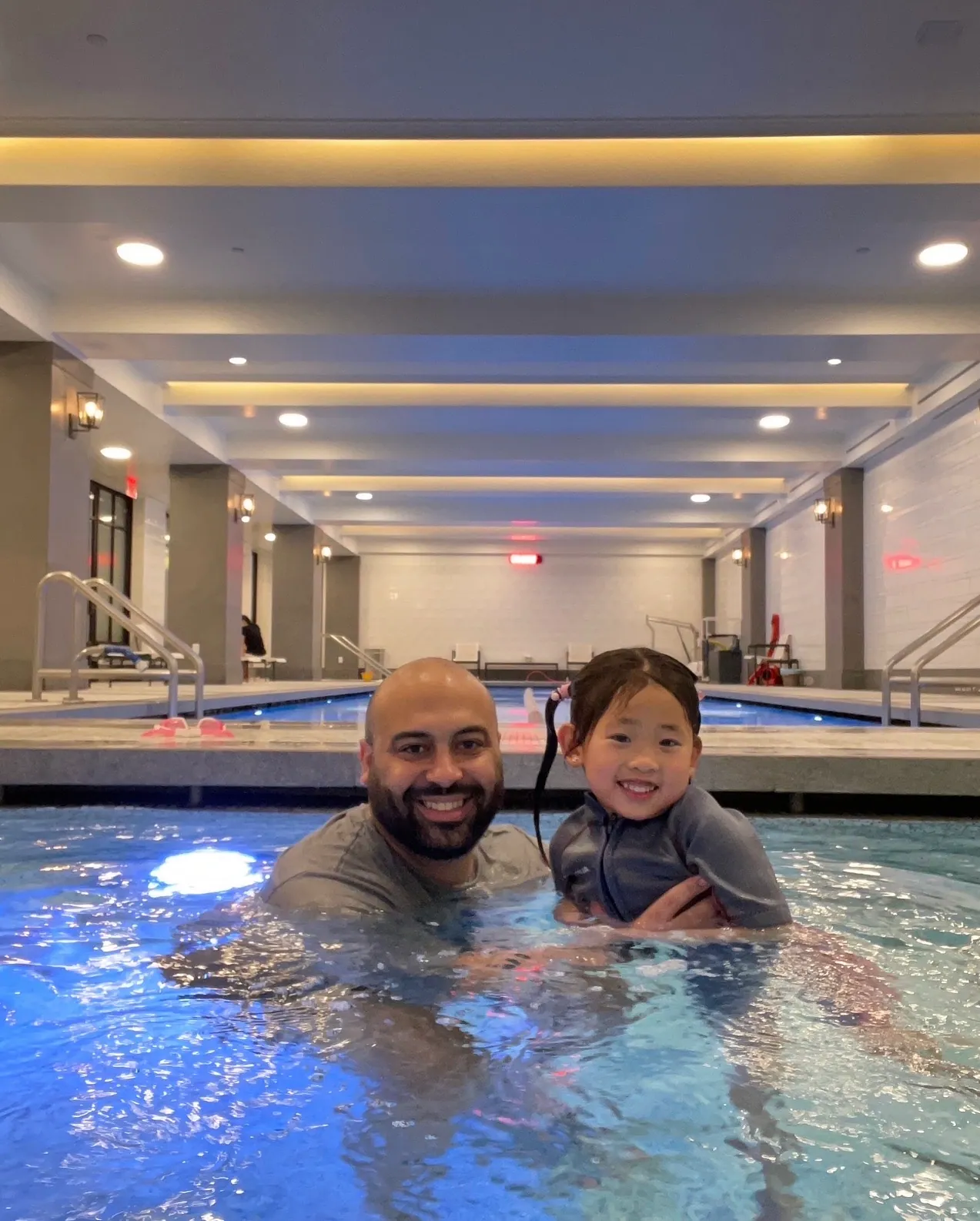
Indoor swim lessons in NYC keep kids swimming through the winter, and the easiest place to take them is a heated pool in your own building or home. A private instructor comes to your indoor pool, teaches on a weekly schedule, and your child arrives at summer still swimming instead of starting over. For most Manhattan families with an amenity pool, winter is one of the best times to make progress.
Here is why winter matters, how to keep little ones warm, and what to work on between November and May.
Why Swim Skills Fade Over the Winter
Swimming is a physical skill, and young children lose physical skills fast when they stop using them. A five-year-old who could float on her back in August may be nervous about putting her face in the water by June.
The pattern is common. Kids swim all summer at a pool in the Hamptons or a backyard in Queens, the weather turns, and the swim bag goes in the closet. Seven or eight months later, the first lessons of the new season are spent rebuilding comfort instead of moving forward.
What fades first
- Breath control. Holding a breath and blowing bubbles feels strange again.
- Comfort with the face in the water. Kids who were dunking happily may hesitate.
- Floating. Relaxing enough to float takes trust, and trust fades with distance.
- Kick timing. Legs forget the rhythm.
Babies and toddlers lose ground fastest, because a few months is a large share of their lives. Older kids hold onto strokes better, but endurance and technique still slip.
Building Pools Are Year-Round Indoor Options
New York has a lot of indoor residential pools. Manhattan high-rises, condo towers in Long Island City and Brooklyn, and some townhouses have heated pools on the amenity floor or in the basement. They run all year, and they are often quietest in winter when residents are busy.
Little Swimmers NYC teaches private lessons at your own pool across all five boroughs. In winter that means indoor building and home pools. The pool needs to be clean, chemically balanced and at least 3.5 feet deep.
If you are not sure your building allows outside instructors, our building pool checklist walks through what to ask management.
Water and Air Temperature for Babies and Toddlers
Temperature matters more for little ones than for anyone else. Babies lose body heat quickly, and a cold baby cannot relax enough to learn.
What to look for
- Warm water. Most indoor building pools are heated. Warmer pools are better for infants.
- Warm air. A pool room that feels chilly to you will feel colder to a wet baby.
- A warm spot nearby. A changing room or a corner away from drafts helps.
Signs your child is too cold
- Shivering or chattering teeth
- Blue or purple lips
- Sudden fussiness after a happy start
If you see these, it is time to get out, even if the lesson has a few minutes left. For infants, we often recommend a 30-minute lesson in winter. We offer 30, 40, 45 and 60 minute options.
For babies, a parent or caregiver is in the water for the first several sessions. Your body heat helps, and so does a snug-fitting swim diaper or a baby wetsuit.
Winter Scheduling
Winter routines in NYC revolve around school, early sunsets and holiday travel. A few things help.
Pick a steady weekly slot
Same day, same time every week works best. Our hours are Monday to Friday 9am to 7pm and Saturday and Sunday 9am to 5pm. Weekday mornings suit babies and toddlers. School-age kids often do well right after school, before dinner and homework.
Plan around travel
Thanksgiving, winter break and February break pull families out of town. Put the dates on the calendar early and cancel at least 24 hours ahead to avoid a charge. Cancellations inside 24 hours are billed at 50 percent, and same-day cancellations at the full rate. We do not offer makeups for missed sessions, so it pays to plan around known trips.
Watch for colds
Winter brings runny noses. Mild sniffles are usually fine, but keep your child home with a fever or a stomach bug, and let us know as early as you can.
Drying Off and Getting Home in the Cold
The lesson is warm. The walk home might not be. A building pool solves most of this, because home is an elevator ride away. If you are heading outside, or to another building, plan ahead.
- Hooded towel or robe right at the pool edge.
- Dry hair fully before going outdoors. Bring a hat.
- Dress in layers in the changing room: dry base layer, sweater, coat.
- Warm snack or drink after the lesson for toddlers who get cranky when hungry.
- Moisturize skin that gets dry from pool water and winter air.
For babies, dress them before you dress yourself. A caregiver on the deck holding the towel makes the handoff faster.
How a 10-Lesson Package Spans a Season
Our 10-lesson packages include priority scheduling, a written progress report, and are valid for 6 months. That window fits winter well.
Start weekly lessons in late October or November. With a couple of weeks off for holidays, ten lessons carry you through the coldest months. The progress report at the end shows where your child started and what they can do now, which makes it easy to plan spring and summer.
Most children show significant improvement within 5 to 8 lessons. A winter package gives you time to get past that point and lock the skills in.
Packages can be paid through Zelle or QuickPay, and we also offer monthly payments. We do not accept cash.
What to Work On in Winter
Winter is the time to build the foundations that make summer swimming easy. These are the skills we focus on.
Breath control
Blowing bubbles, holding a breath on cue and exhaling underwater. A child who controls their breath stays calm when water splashes their face.
Floating
Back floats and front floats, first with support and then alone. Floating is a safety skill. A child who can roll to their back and float can rest and call for help.
Kicking
Steady kicks from the hips with relaxed feet, practiced on a kickboard and then in a glide. Good kicks make every stroke easier later.
Getting in and out safely
Finding the wall, moving hand over hand to the steps and climbing out without help. These skills transfer to any pool.
For older kids
Stroke technique, side breathing and endurance. Winter is a good time to clean up freestyle before the summer swim team or camp swim test.
By spring, these skills are habits. Summer becomes about swimming farther and having fun.
What Parents Have Seen
Tara E. wrote in her Google review that "by the age of three, each of them was confidently swimming without floaties." That kind of result comes from steady lessons over time, and winter weeks count toward it as much as summer ones.
Book Before Holiday Schedules Fill
Winter slots go fast once families settle their holiday plans. Weekday after-school times and weekend mornings fill first. If you want a regular weekly slot, book in October or early November.
Your first lesson is a trial at the regular rate. It sets a baseline so your instructor can plan the season. Every instructor is certified, CPR and AED trained, background checked and fully insured, and you get progress notes after every session.
Start Your Winter Lessons
See our formats on the lessons page, compare packages, or call 917-755-0378 to talk through your pool and schedule.
Questions parents ask
Where can my child take indoor swim lessons in NYC during winter?
If your building, condo or home has an indoor pool, a private instructor can teach there all winter. Many Manhattan amenity buildings have heated indoor pools that stay open year-round.
Do kids lose swimming skills over the winter?
Often, yes. Young children who stop swimming for several months usually come back with less comfort in the water and weaker breath control. Regular winter lessons keep those skills in place.
Is it safe for babies to swim in winter?
Yes, in a heated indoor pool with a warm deck area. Keep sessions short for infants, watch for shivering or blue lips, and dry and dress your baby quickly afterward.
How long does a 10-lesson package last?
Little Swimmers NYC 10-lesson packages are valid for 6 months, so weekly lessons from late fall carry a child through the winter and into spring.