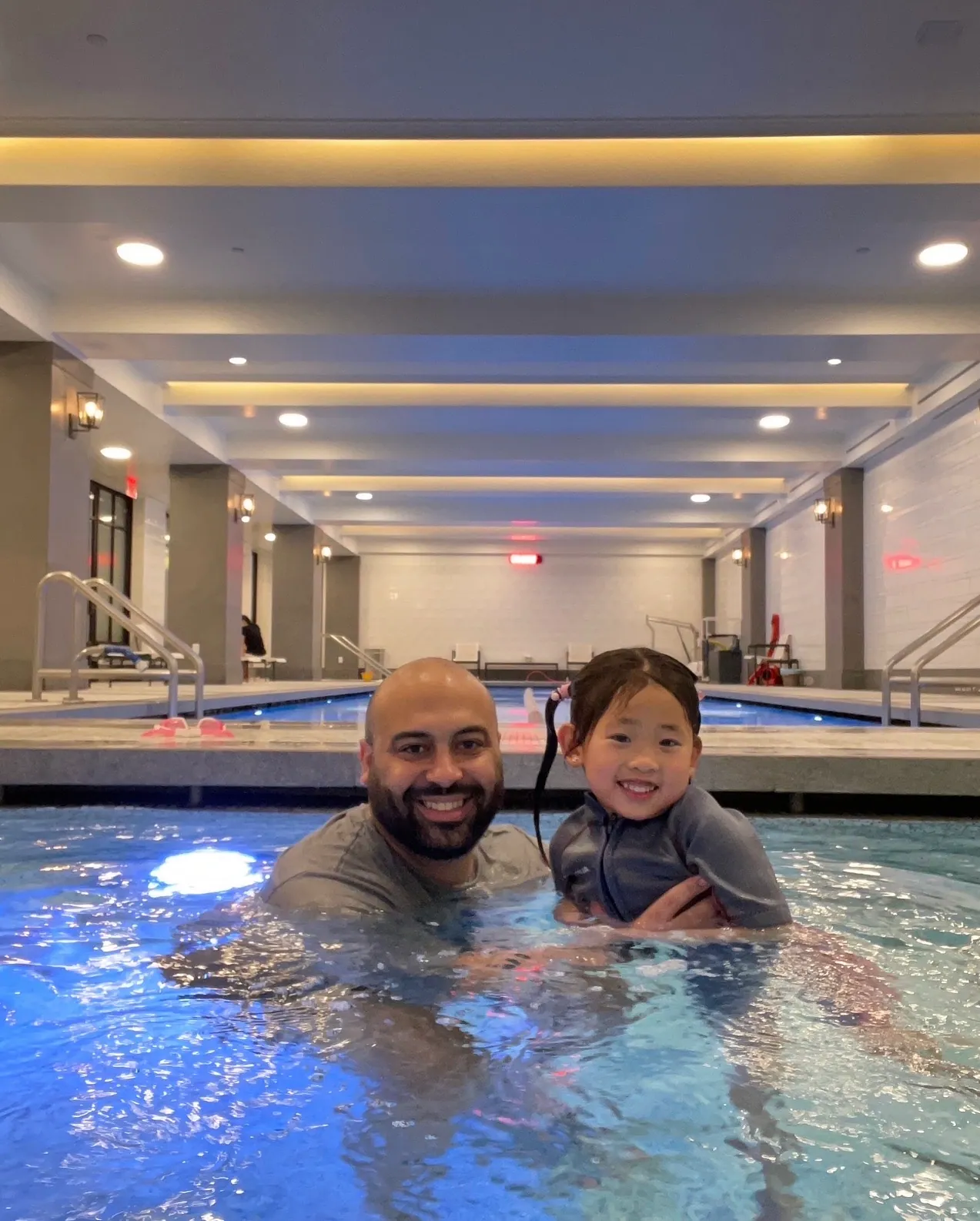
Your baby can start swim lessons at around 4 months old, once they have steady head and neck control and your pediatrician has cleared them for water activity. At that age, lessons focus on comfort, breath control and trust in the water. A parent or caregiver is in the pool with the baby, and the instructor coaches you both.
That is earlier than many NYC parents expect. Here is what baby lessons involve, how to tell when your little one is ready and how to set things up in a city pool.
Why Start as Early as 4 Months
Babies at 4 to 12 months are often more relaxed in the water than toddlers. They have not learned to be afraid of it yet. Starting early lets water feel normal before fear has a chance to set in.
Early lessons are not about strokes. They build the habits that make swimming easier later:
- Comfort. The water becomes a familiar, happy place.
- Breath control on cue. Babies learn a verbal signal before their face gets wet.
- Back floating with support. The first step toward a safety float.
- Trust. Between baby and parent, and between baby and instructor.
The American Academy of Pediatrics notes that swim lessons can lower drowning risk for young children, and that lessons are one layer of protection alongside constant supervision and barriers around pools. No lesson makes a baby safe on their own around water.
What Happens in an Early Baby Lesson
For infants, a parent or caregiver is always in the water for the first several sessions. The instructor guides you through each step and explains why it matters, so you can repeat it during family pool time.
Getting in
You enter the pool holding your baby close, chest to chest. The first few minutes are about getting used to the water: gentle bouncing, splashing hands, songs.
Holds and positions
The instructor shows you a few holds. Face to face with your hands under the arms. Baby on their back with their head resting on your shoulder. Baby facing out so they can see the pool.
Breath cues
You will learn a simple cue, such as saying your baby's name and "ready, go," followed by a little water poured over the head. Over time, babies learn to close their eyes and hold their breath when they hear the cue.
Back float practice
With your support under the head and back, your baby lies flat and feels the water hold them. This is the start of the most important safety skill we teach.
Ending well
Every lesson ends with something your baby enjoys. A happy finish makes the next lesson easier.
Signs Your Baby Is Ready
- Head and neck control. Most babies have this by around 4 months.
- Pediatrician clearance. Ask at your next checkup.
- Generally healthy. Skip lessons during fevers, ear infections or stomach bugs.
- Access to a suitable pool. Clean, chemically balanced, warm and at least 3.5 feet deep in some part.
If your baby was born early or has a health condition, talk with your pediatrician about timing.
Signs to wait a little longer
Some days are not good swim days. If your baby is overtired, teething hard or just fed, the lesson will be harder for everyone. Schedule lessons after a nap and about an hour after a feed when you can. A rested, comfortable baby is far more open to new things.
Water Temperature and Comfort
Babies lose body heat quickly. A cold baby cannot relax, and a baby who cannot relax will not learn.
- Heated pools are best. Most indoor building pools in Manhattan are heated.
- Keep it short. A 30-minute lesson often suits infants. We offer 30, 40, 45 and 60 minute options.
- Watch for cold. Shivering, blue lips or sudden fussiness mean it is time to get out.
- Swim diaper. Required in nearly every pool. A snug swim diaper also adds a little warmth.
- Warm towel ready. A hooded towel at the pool edge makes the handoff fast.
What to Expect Over the First Few Months
Every baby moves at their own pace. A rough picture of the first stretch:
- First few lessons: getting comfortable, learning holds, first breath cues.
- Next several lessons: calmer responses to water on the face, longer supported floats, more kicking.
- Over months of weekly lessons: reaching for the wall, brief independent floats with an adult right there, early rolling from front to back.
Babies and toddlers build safety skills first, and that takes time. Weekly lessons work much better than occasional ones, because babies forget between long gaps.
You will also notice changes in yourself. Most parents start nervous about holding a slippery baby in the water. After a few sessions, your holds are steady and you know the cues. That confidence passes straight to your baby.
NYC Considerations for Baby Swimming
Taking an infant across the city for a swim class is a lot of work. Subway stairs with a stroller, a crowded locker room and a long ride home with a wet baby add up.
Little Swimmers NYC comes to you. We teach at your own pool across all five boroughs, and most of our families are in Manhattan buildings with amenity pools. Home is an elevator ride away when the lesson ends. If you have not checked with your building yet, our building pool checklist covers what to ask.
Baby lessons fit well on weekday mornings, when building pools are quiet. Our hours are Monday to Friday 9am to 7pm and Saturday and Sunday 9am to 5pm.
Who Teaches Baby Lessons
Every instructor is certified, CPR and AED trained, background checked and fully insured. You get progress notes after every session. Harrison Alvarado is our owner and lead instructor.
Tara E. wrote in her Google review that "by the age of three, each of them was confidently swimming without floaties." Results like that start with early, steady lessons.
Getting Started
Your first lesson is a trial charged at the regular rate. It sets a baseline for your baby and gives you a feel for how lessons work. From there, many families choose a 10-lesson package, which includes priority scheduling and a written progress report and is valid for 6 months.
We accept Zelle, QuickPay, monthly payment plans and packages. No cash. To see how comfort grows into real swimming over time, read Building Water Confidence: From 4 Months to First Strokes.
Book Your Baby's First Lesson
See our lessons page and FAQ, or call 917-755-0378 to talk through your pool and your baby's age.
Questions parents ask
When can my baby start swim lessons?
Babies can start at around 4 months old, once they have good head and neck control and their pediatrician has cleared them for water activity.
Does a parent get in the water for baby swim lessons?
Yes. For infants, a parent or caregiver is in the water for the first several sessions while the instructor coaches both of you.
Will my baby learn to swim at 4 months?
Not in the sense of strokes. Early lessons build comfort, breath control on cue, back floating with support and trust in the water. Those are the foundations for swimming later.
How long should a baby swim lesson be?
Shorter is better for infants. A 30-minute lesson is often right for babies, since they tire and cool down quickly. We also offer 40, 45 and 60 minute options for older children.
What water temperature is best for babies?
Warm. A heated indoor pool is best for infants, because babies lose body heat quickly. If your baby shivers or their lips turn blue, end the session.