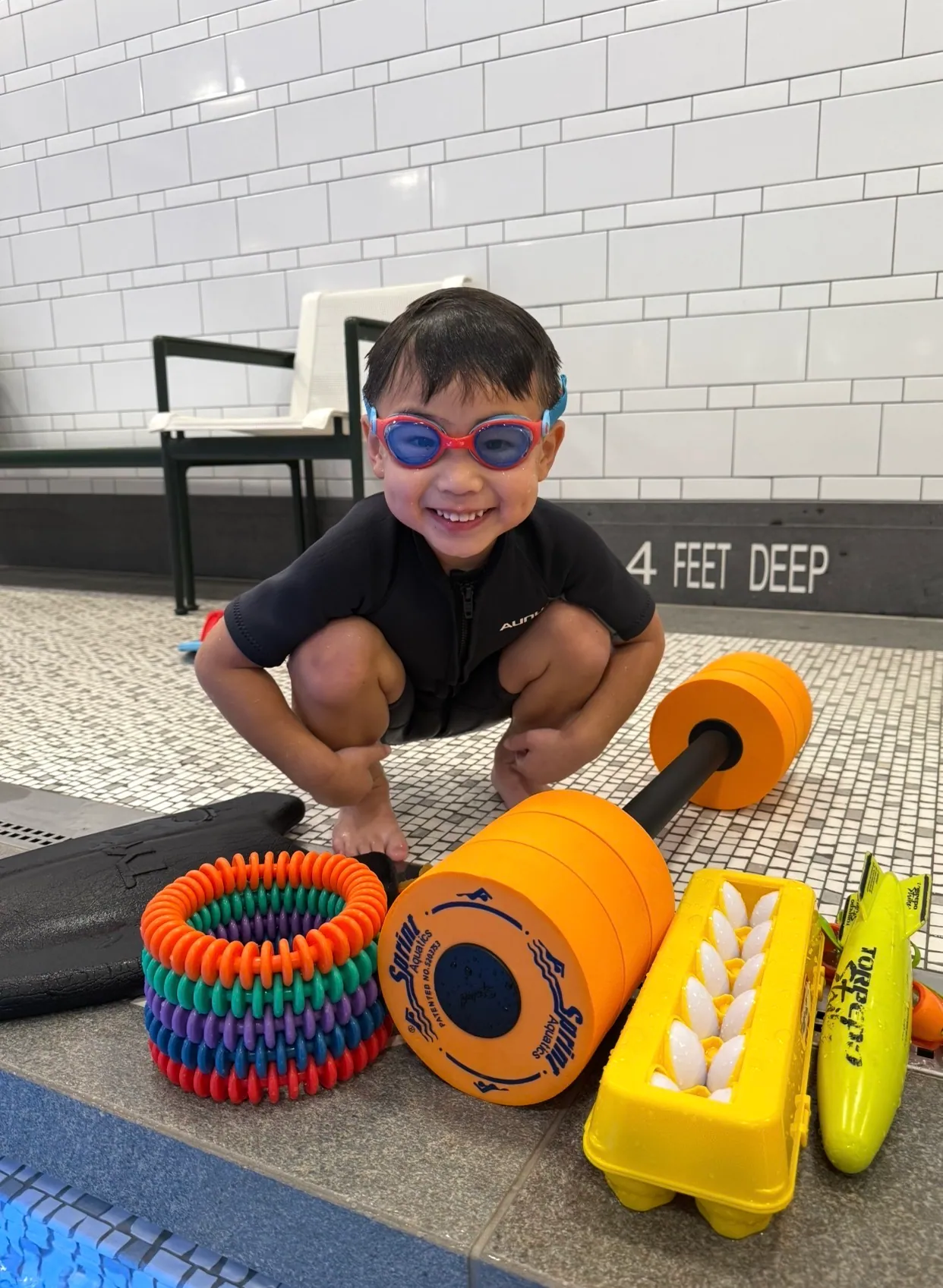
Water confidence builds in stages. A baby starts by feeling safe in warm water with a parent, then learns to hold a breath on cue, float on their back with support, roll over and reach the wall, and finally kick and stroke across the pool alone. Each stage rests on the one before it. Steady weekly lessons and calm pool time between them move a child from 4 months to first strokes.
At Little Swimmers NYC, we teach from 4 months old through teens and adults. Here is what each stage looks like and how you can help at home.
Why Confidence Comes Before Technique
A tense child sinks. Muscles tighten, breathing gets short, and the body stops floating the way it should. A relaxed child floats more easily, listens better and tries new things.
That is why the early lessons spend so much time on comfort. Strokes are easy to teach once a child trusts the water. Without that trust, every new skill is a fight.
Stage 1: Water Introduction (About 4 to 12 Months)
The first lessons are slow and gentle. A parent or caregiver is in the water for the first several sessions, and the instructor coaches the adult as much as the baby.
Goals at this stage
- Linking water with warmth and safety
- Learning a breath cue, such as the baby's name and "ready, go," before water touches the face
- Getting comfortable with a wet face
- Supported back floating, with the baby's head resting on a parent's shoulder or hand
- Trust between baby and caregiver in the water
What progress looks like
At first, a splash on the face may bring a frown or a cry. After a number of lessons, many babies close their eyes and hold their breath when they hear the cue. Small wins like that are the whole point of stage one.
Warm water matters here. Babies lose heat fast, so short sessions in a heated pool work best. For more on timing, read When Can My Baby Start Swimming?
Stage 2: Safety Skills (About 12 to 24 Months)
As babies become toddlers, they are stronger and more mobile. This is when safety skills come in.
Skills we work on
- Back float. The most important self-rescue skill. A child on their back can breathe and call for help.
- Rolling from front to back. So a child who falls in face-first can turn over.
- Reaching for the wall. Turning toward the nearest edge and grabbing on.
- Getting out. Moving hand over hand along the wall to the steps and climbing out.
These are survival skills first and swimming skills second. A toddler who can roll over and float has time for an adult to reach them. Lessons never replace constant supervision near water.
Babies and toddlers build safety skills first, before strokes, and that stage takes patience.
Stage 3: Foundation Swimming (About 2 to 5 Years)
Preschoolers begin real swimming mechanics. This is when parents start to see the moments they have been waiting for.
Skills at this stage
- Kicking from the hips with relaxed feet
- Front glide with the face in the water
- Arm movements for early freestyle
- Breathing by lifting or turning the head for air
- Swimming short distances between the instructor and the wall
- Jumping in and turning back to the wall
By the end of this stage, many children can swim across a pool on their own. Tara E. wrote in her Google review that "by the age of three, each of them was confidently swimming without floaties."
Stage 4: Stroke Refinement (About 5 Years and Up)
School-age kids work on technique and endurance.
- Freestyle with side breathing
- Backstroke
- Breaststroke and butterfly for kids who are ready
- Treading water and comfort in deeper water
- Swimming longer distances without stopping
Older kids are often working toward something specific: a camp swim test, a summer swim team or keeping up with friends. Private lessons let us aim straight at that goal.
Starting Later Is Fine
Not every child starts as a baby. Plenty of kids come to us at 5, 7 or 10, some of them scared after a bad experience. Older beginners go through the same stages, usually faster. They still need comfort before technique.
For a fearful child, we slow down. No forced dunking. Short, positive sessions. Lots of choice, such as which toy to use or which side of the pool to start on. Confidence grows when a child feels in control.
Teens and adults follow the same path. An adult who never learned to swim often carries years of worry about deep water. The first lessons focus on breathing, floating and standing up safely from a float. Once those feel easy, strokes come quickly.
What Parents Can Do Between Lessons
Lessons work best when kids spend relaxed time near water in between.
- Family pool time. Floating, splashing and playing in your building or backyard pool, with no pressure to practice.
- Bath-time bubbles. Blowing bubbles in the bath builds breath control.
- Use the same cue. If the instructor uses "ready, go" before a dunk, use it too.
- Stay calm yourself. Kids read your face. If you look nervous, they will be nervous.
- Celebrate small wins. A first face-in-water moment matters as much as a first lap.
How Long Does It Take?
Every child is different. Age, temperament and how often they swim all play a part.
Most children show significant improvement within 5 to 8 lessons. Babies and toddlers spend longer on safety skills before independent swimming. Older kids with no experience often move quickly once they relax.
The biggest factor is consistency. Weekly lessons beat occasional ones by a wide margin, because skills fade between long gaps, especially over winter. Our winter lessons guide covers how to keep progress going through the cold months.
How Little Swimmers NYC Teaches Confidence
We teach at your own pool, across all five boroughs, so your child learns in water they already know. Every instructor is certified, CPR and AED trained, background checked and fully insured. You get progress notes after every session, so you can see which stage your child is in.
Your first lesson is a trial charged at the regular rate, and it sets a baseline. Our 10-lesson packages include priority scheduling and a written progress report, and they are valid for 6 months.
Start at Any Stage
See our lessons page and FAQ, or call 917-755-0378.
Questions parents ask
How do you build water confidence in a baby or child?
Through small, repeated steps in warm, familiar water: comfort first, then breath control, supported floating, safety skills like rolling to the back, and finally strokes. Weekly lessons and relaxed pool time between them help most.
How long does it take a child to learn to swim?
It varies by age and starting point. Most children show significant improvement within 5 to 8 lessons. Babies and toddlers build safety skills first, which takes longer before independent swimming.
What should I do if my child is afraid of the water?
Go slowly, never force submersion, keep sessions short and positive, and practice in a pool your child knows. A consistent private instructor helps fearful kids settle in.
Can parents help between swim lessons?
Yes. Relaxed family pool time, bath-time bubble blowing and using the same breath cue your instructor uses all reinforce what your child learns in lessons.